
Updates on drones including latest technology and use in conflicts around the world. An executive summary, key events, and curated articles.
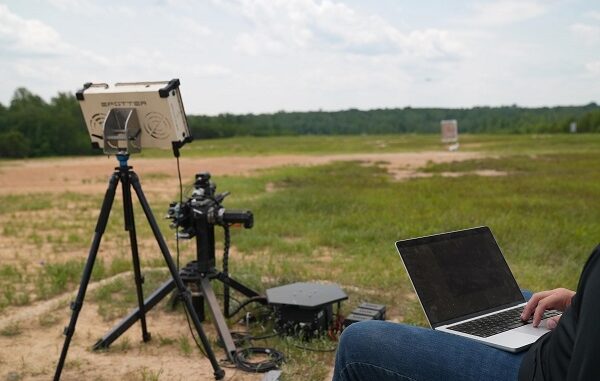
Image: The GAX500-3D radar and EDDA control system are integrated with a C-UAS turret designed to defend against drone swarms. (Photo courtesy of Spotter Global)
Executive Summary
More than 200 military, federal, law-enforcement and industry representatives gathered for JIATF-401’s second summit to assess the counter-UAS task force’s first-year progress and discuss the path ahead. Other developments highlighted this month include Ukraine’s horizontal kill-web architecture, the Army’s use of directed energy against suspected cartel-linked drones and new systems designed to detect and defeat Group 1 UAS.
Curated Articles
The topics listed below are presented with descriptions and with links to the online article.
- CRS Report on MQ-25
- Podcast on the USMC’s FPV drone training program
- JIATF-401 Summit
- Commentary – drones and modern warfare
- U.S. Army’s directed energy drone defense on the southern border
- Pentagon contract for cheap drone interceptors
- Navy’s Quest for New CCA Drone
- Russia growing long-range drone capability
- Ukraine’s horizontal kill web architecture
- Ukraine’s Delta system
- Unmanned fires observer
- Drones and Myanmar’s Civil War
- Cartel drone operations
- Taiwan spends billions for drone builders
- Russian drone attack at German airport
Featured Topic – Neutralizing Group 1 UAS
The growing threat from drone swarms is increasing demand for affordable systems capable of protecting critical infrastructure and mobile forces. Spotter Global and 9 Mothers have partnered to integrate Spotter Global’s GAX500-3D radar into EDDA, 9 Mothers’ portable, autonomous, hard-kill Counter-Unmanned Aircraft System (CUAS) turret. (top image) The integration mitigates the growing threat of highly lethal, fast-moving drone swarms. According to the manufacturers, the integrated system can reduce engagement costs to as little as $7 per drone.
The landscape of modern armed conflict has been fundamentally shifted by the integration of high-speed, explosive-carrying First-Person View (FPV) drones, radio-silent “dark” drones, and coordinated drone swarms. Ukrainian officials and some military analysts estimate that drones now account for as much as 70–80 percent of battlefield casualties or successful strikes in the Russia-Ukraine war, although methodologies and definitions vary. Legacy CUAS methods have largely struggled to reliably protect personnel and critical infrastructure against these highly evasive airborne threats.
The combined systems outlined above address this critical capability gap. EDDA is designed to engage Group 1 UAS—systems weighing 20 pounds or less, normally operating below 1,200 feet and at speeds below 100 knots. The GAX500 is designed to track up to 50 targets simultaneously and update all 50 tracks 18 times per second. Together, the systems allow for 360-degree detection, tracking and engagement of small drones. It is currently available for deployment to United States military forces, allied nations, and critical infrastructure clients.
U.S. Military Drone Developments
Video – SF Command and Drones. The 1st Special Forces Command (Airborne) hosted its inaugural Best Drone Competition at the Fort McClellan Training Center in Anniston, Alabama, August 23–29, 2026. UAS pilot teams from across USASOC competed to test their proficiency and demonstrate emerging drone capabilities. This video opened the competition. (U.S. Army video by Staff Sergeant Gabriel Davis, DVIDS, August 23, 2026, 1 min)
CRS Report on MQ-25. The U.S. Navy is developing an aircraft carrier-based unmanned aircraft system (UAS) to perform aerial refueling and intelligence, surveillance, and reconnaissance (ISR) missions. The MQ-25 Stingray, if the system enters production in FY2026 as planned, would be the U.S. Department of Defense’s (DOD’s) first unmanned tanker and the Navy’s first carrier-based unmanned aerial vehicle (UAV). Learn more about the Stingray in “MQ-25 Stingray: Background and Issues for Congress,” Congressional Research Service (CRS IF12972), August 8, 2025. https://www.congress.gov/crs-product/IF12972
Podcast – How a Team of Marines Built the Corps’ FPV Drone Training Program from a Cold Start, War on the Rocks, July 1, 2026, 49 minutes. https://warontherocks.com/how-a-team-of-marines-built-the-corps-fpv-drone-training-program-from-a-cold-start/
JITF-401 Summit. More than 200 U.S. military, federal, law enforcement and industry stakeholders met in Virginia on August 21 at Joint Interagency Task Force 401’s second summit to discuss the task force’s first-year progress and path ahead. In onstage presentations and a media roundtable on the sidelines of the event, JIATF-401 insiders shared new details about their vision and work to drive interagency cohesion and “normalize” the use of counter-drone assets for law enforcement, public safety and national security operations. “One year in, America’s counter-drone task force still has a ton of work to do”, DefenseScoop, August 24, 2026.
Commentary – Drones and Modern Warfare. Every major war reshapes how future wars are fought. Ukraine may ultimately prove to be one of those inflection points. No conflict offers a perfect blueprint for the next war. Every war is shaped by its own geography, technology, and political context. The value of Ukraine lies less in predicting the future than in revealing which long-held ideas deserve renewed scrutiny. “No Place to Hide: Warfare in the Age of Persistent Observation”, by Sarah Adams, Modern Warfare Institute at West Point, July 30, 2026.
U.S. Army’s Directed Energy Drone Defense on the Southern Border. In the past week, service members assigned to Joint Task Force Southern Border used the Army Multipurpose High Energy Laser system to stop three hostile, unmanned aircraft systems deemed a threat. They were believed to be linked to drug cartels. The engagement marked the first publicly announced use of the AMP-HEL system against suspected cartel-linked drones along the southern border. Directed-energy weapons, such as lasers, can be used to take out both drones and incoming cruise missiles, at a much lower cost than using more expensive kinetic weapons like missiles. “Army Lasers Blast Drones, Proving Directed-Energy Weapons Are Future”, DoD, August 28, 2026.
Pentagon Contract for Cheap Interceptor Drones. The Department of Defense has awarded a contract worth almost $11 million to X-Bow Systems, a New Mexico-based rocket manufacturer, under a program aimed at developing a new anti-ballistic weapon for less than $750,000 a shot — roughly a fifth the cost of its top-tier equivalent, the Patriot missile. “Pentagon awards contract in race to field cheaper interceptors, missiles“, by Katie Livingstone, Defense News, August 27, 2026.
Navy’s Quest for New CCA Drone. Naval Air Systems Command (NAVAIR) has released a new Request for Information that outlines a set of requirements for a CCA Increment 1 prototype. The Navy wants an aircraft capable of operating from its aircraft carriers, carrying plentiful weapons, conducting strike missions in highly contested environments, and operating both independently and as part of a larger crewed-uncrewed team. “Navy Sounds Like it now Wants the Air Combat Drone it Notoriously Passed Over a Decade Ago”, The War Zone, September 1, 2026.

Drones and the Russia-Ukraine War
Russia Grows Drone Capabilities. Satellite imagery reveals growing launch infrastructure for Geran-family one-way attack drones, including the capability of launching heavier, higher-performing types. “Russia is Expanding its Long-Range Strike Drone Network“, The War Zone, August 17, 2026.
Horizontal Kill Web Architecture. James L. Andreasen describes on how a Ukrainian operator uses video feeds to gather intelligence and pass targeting information through the kill chain utilizing a horizontal kill web. The horizontal kill web is an architecture for allowing sensors, AI tools, intelligence organizations, local commanders, and effectors to operate from the same live operational picture. Ukraine has already demonstrated that this architecture works in large-scale combat. Andreasen argues that the U.S. Army’s sensor-to-shooter process is slower and more hierarchical than Ukraine’s model. The United States should field it, train with it, and build future drones to operate inside it. “Borrow What Works: The Case of Army Adoption of Ukraine’s Combat-Tested Horizontal Kill Web Architecture”, Modern Warfare Institute, August 14, 2026.
Ukraine’s “Delta” System. The targeting system pulls together battlefield data to identify targets, creating a miles-wide “kill zone.” The system has reportedly helped Ukrainian forces identify targets, coordinate drone operations and slow Russian advances. “Ukraine’s Most Potent Weapon: The Software Orchestrating Its Drone Army”, The New York Times, August 26, 2026. (subscription)
Unmanned Fires Observer. The U.S. Army needs to update its call for fire procedures to match the efficiency that Ukrainians have demonstrated in their war against the Russian occupiers. Read more in “The Unmanned Fires Observer: The Army’s Drone-Age Doctrine Rewrite is Skipping a Crucial Part”, by Alexei Hoffman, Modern War Institute at West Point, August 17, 2026.
Drones and the Iran War
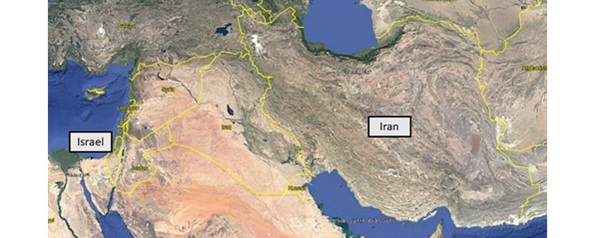
After more than a month without publicly confirmed U.S. strikes inside Iran, U.S. forces attacked Iranian rocket-launching positions on Larak Island. Iran responded with missile and drone attacks against U.S.-associated installations in Jordan and the United Arab Emirates. Regional air defenses intercepted at least some of the incoming weapons.
Separately, Iran claimed during August that its air defenses had shot down U.S. MQ-9 Reaper drones near Hormozgan and the Strait of Hormuz. These were Iranian claims and should be described as such unless independently confirmed by the United States.
International Drone Developments
Drones and Myanmar’s Civil War. Drone-enabled ground combat has emerged in the Southeast Asian region. According to Grenier, Myanmar now ranks third globally in recorded conflict-related drone events. Unlike the relatively open terrain associated with much of the fighting in Ukraine and the Iran conflict, Myanmar presents dense jungle canopy, rugged hills and widely dispersed armed groups. The drones are increasingly shaping how forces fight in modern Southeast Asia. The Myanmar conflict offers a rare opportunity to study modern warfare in the Pacific region. “Drones are Widening the Jungle Fight”, by Alejandro Grenier, Small Wars Journal, August 14, 2026.
Cartel Drone Operations. This opinion piece explores knowledge transfer and dissemination within the context of the Mexican drug cartels’ adoption of drone technology and tactics which present a “clear and present danger” to the southern border of our American homeland. “Importing Warfare: The Rise of Cartel Drone Operations”, by William J. Liffick and Peter K. Forster, Small Wars Journal, August 30, 2026.
Taiwan Spends Billions for Drone Builders. The big funding boost aims to support a homegrown industry seen as vital to the island’s defense against an attack by China. By building a full fleet of uncrewed systems, Taiwan hopes to build defensive capabilities intended to make its far more powerful adversary to think twice about invading. “Taiwan Lines Up $7 Billion Boost for Drone Builders to Counter China”, by Joyu Wang, The Wall Street Journal, August 27, 2026. (subscription)
Russian Drone Attack at German Airport. A drone attack at Leipzig/Halle Airport was blamed on the Russians. A drone stacked with military-grade explosives was found next to a Ukrainian cargo plane at the airport. Video revealed that the drone hit the aircraft and then fell to the ground without exploding. Officials said the August 4 attempt was part of a campaign aimed at undermining European support for Ukraine against Russia. “Germany blames Russia for drone attack on airport, announces countermeasures”, The Washington Post, September 1, 2026.
**********
Previous Monthly Drone Updates:
