
By Shaun Chittick.
This essay provides previously unreported details regarding the subsurface aspect of Operation THUNDERHEAD, a little-known attempt to rescue United States Prisoners of War (POWs) near the tail end of the U.S. involvement in Vietnam, as well as some key lessons learned that have substantially changed the face and focus of U.S. combat submersible operations. Operation THUNDERHEAD utilized a cutting-edge capability, and a mission profile unheard of at the time, potentially inserting American Special Operations Forces (SOF) on the ground near the mouth of the Red River about 150 miles southeast of Hanoi, North Vietnam. It is a by-product of an effort to fill in missing details from the first operational use of United States Swimmer Delivery Vehicles (SDVs) in combat, and for one of the most unique and noble missions during the Vietnam War.
Background
Operation THUNDERHEAD ultimately involved all three components of the SEALs’ operating envelope. Previous documentation has primarily focused on the air, land and surface sea aspects, but very little of the undersea, or subsurface mission has received attention to date. The author has had the privilege of interviewing some key personnel who occupied critical roles during the mission’s planning and execution. Their inputs are invaluable contributions to this tale rich in imagination, daring, determination, and naval tradition.
LT Melvin “Spence” Dry was also the last SEAL killed in Vietnam, yet very few know the details behind his death in this stirring attempt to recover captured U.S. servicemen and reinvigorate hope for those who remained prisoner under brutal conditions in North Vietnam. Details of this mission were not made public until 2005, due to some aspects that remain classified to this day. LT Dry was posthumously awarded the Bronze Star with Valor in 2008, thanks to the efforts of his Naval Academy classmates, Captain John D. Chamberlain, and Secretary of the Navy James Webb. For more detail on LT Dry, the author highly recommends reading the Proceedings article listed in the references below.
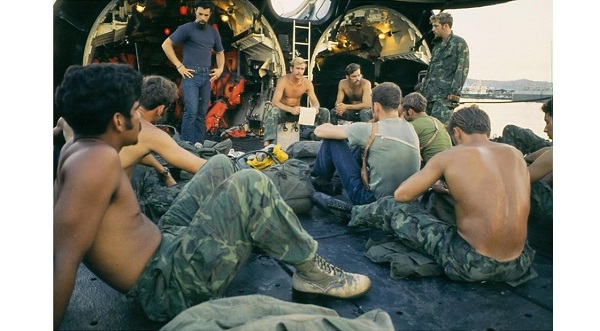
Photo: Lieutenant Melvin S. Dry, USN, briefs SEAL Platoon Alpha aboard the submarine USS Grayback in April 1972 (Official U.S. Navy photograph, photographer unknown)
Over 350 U.S. Prisoners of War (POWs) were being held captive at Hoa Lo, the infamous “Hanoi Hilton”, and various offshoot POW camps in the vicinity of Hanoi. There had been previous, unsuccessful escape attempts due to lack of local support in the vicinity of Hanoi.
A previous POW rescue attempt by U.S. Special Operations Forces (SOF) in November 1970, now referred to as the Son Tay Raid, was unsuccessful only because the captives were moved weeks prior to mission execution. It illustrated the U.S. government’s priority and resolve to recover a large number of U.S. troops incarcerated under some of the most brutal conditions in any modern conflict to date.
Intelligence reported that several U.S. prisoners were planning to escape from Hoa Lo, steal a boat and travel southeast down the Red River about 225 kilometers to the Gulf of Tonkin.
LCDR Edwin Towers, a Naval Aviator assigned to the U.S. 7th Fleet Staff, was directed to begin mission planning to locate and effect a recovery for escaping American POWs. After intensive review of available forces and capabilities, LCDR Towers developed a bold plan to use Navy SEALs launched from a U.S. submarine to locate, rendezvous with, and coordinate a tactical recovery for these escaped POWs.
First US Submersibles in Combat
On 15 MAY 1972, Admiral Thomas H. Moorer, Chairman of the Joint Chiefs of Staff, authorized the U.S. Pacific Command (PACOM) to execute Operation THUNDERHEAD, a rescue plan proposed by Pacific Fleet a month earlier. Full details of the operation were known to only a handful of officers individually cleared by Admiral John S. McCain Jr., the PACOM commander.
The nearest direct action SEALs were ST-1’s Alfa Platoon, commanded by LT Dry, and forward deployed to Subic Bay, Republic of the Philippines during a routine WestPac.
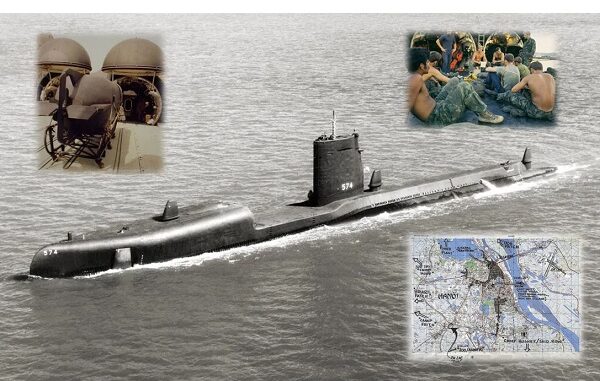
LT Dry’s SEAL platoon left Subic Bay in April aboard amphibious-transport submarine USS Grayback (LPSS-574), commanded by CDR John D. Chamberlain. Grayback, formerly a Regulus guided- missile diesel-electric submarine, was converted in 1968 to carry approximately 60 troops plus up to four Swimmer Delivery Vehicles (SDVs) in two “wet” hangars on her bow. The embarked Naval Special Warfare (NSW) Task Unit consisted of ST-1 Alfa Platoon, a UDT-11 SDV Platoon, and two Mk VII SDVs.
Details of the mission were so sensitive and compartmented that Grayback’s Commanding Officer (CO) was ordered to make the entire transit north submerged. The NSW Task Unit (NSWTU) was directed to link up with and coordinate the rescue effort for U.S. POWs recently escaped from Hoa Lo Prison in North Vietnam. The NSWTU elected to conduct SDV insertion of a SEAL reconnaissance team from USS Grayback onto an island at the confluence of the Red River Delta and the Gulf of Tonkin.
The plan was to establish an observation post for 24–48 hours in order to conduct surveillance of the river approach, link up with, and coordinate the tactical recovery for the escaped U.S. POWs. The POWs would then be transported by helicopter or rubber boat to a U.S. Navy vessel operating on YANKEE Station in the Gulf of Tonkin. The NSWTU would recover back aboard the submerged USS Grayback upon completion of the mission. Other friendly units were purposely not briefed on the mission to maintain operational security due to its extremely sensitive nature. Also, there was a reported garrison of North Vietnamese Army troops on the island, and Vietnamese fishermen were routinely sighted throughout the littoral area at the mouth of the Red River.
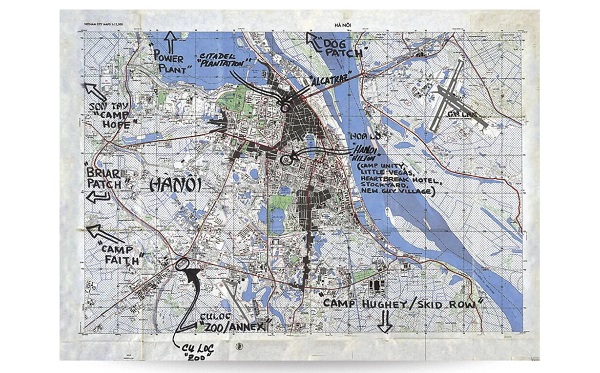
Photo: This detailed map shows the location of the Hanoi Hilton within North Vietnam. The POWs gathered materials to help disguise themselves as locals after the planned escape from the prison. (National Archives) Click here for larger image of map.
The order of battle for the recovery and supporting forces included USS Long Beach, USS Juneau and USS Duluth, all onboard YANKEE Station in the Gulf of Tonkin. USS Grayback, with embarked NSWTU consisting of one SEAL platoon, one UDT-11 platoon, two Mk VII SDVs and the standard UDT/SEAL combat loadout. Helicopter Combat Squadron SEVEN (HC-7) was already on YANKEE Station flying SH-3s to provide Intelligence, Surveillance and Reconnaissance (ISR), as well as Combat Search and Rescue (CSAR) for downed pilots, but it would shift support to THUNDERHEAD once the mission was underway. LCDR Edwin “Ed” L. Towers was serving on the COMSEVENTHFLEET Staff when he was appointed Officer-in-Charge and lead planner for Operation THUNDERHEAD. As Command and Control for the operation, LCDR Towers personally flew on each of the approximately 70 sorties flown over North Vietnam conducting airborne reconnaissance of “The Hourglass”, the Red River Delta and adjacent Gulf of Tonkin coastline in search of escaping U.S. POWs.
USS Grayback arrived on-station 03 June 1972. She bottomed out in 60-70 feet of water, in the Gulf of Tonkin about two nautical miles outside the Red River Delta. Grayback ascended to snorkel depth each night, but could hear radar pings against her snorkel, most likely from U.S. warships at YANKEE Station. Grayback was in EMCON (Emissions Control, or radio silence) for the duration of the mission. North Vietnamese fire control radar was also intermittently detected. A pair of SR-71s broke the sound barrier over Hoa Lo on two separate dates to signal the POW Senior Ranking Officer (SRO) that American recovery forces were in place.
During the fifteen day recovery window, an SDV would launch each night to surveil the planned recovery area, and then return to Grayback just before dawn each morning. The NSWTU would swap SDVs and/or crews each night until they successfully rendezvoused with the POWs. USS Grayback, the NSWTU and HC-7 would focus solely on this POW recovery effort through the 15th of June, or sooner, if a recovery was successful before the deadline.
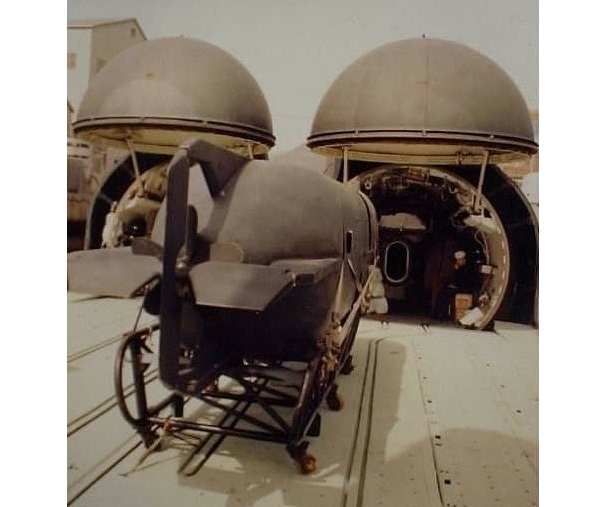
Photo: U.S. MK7 SDV loaded aboard USS Grayback submarine. (U.S. Navy photograph)
At 2330 on 04 JUN, LT Dry and CWO1 “Moki” Martin launched via SDV crewed by two UDT-11 personnel and transited northwest to the mouth of the Red River. The UDT crew piloted the submerged SDV on a northwesterly course from Grayback toward a navigation buoy adjacent to island at the mouth of the Red River, equipped with only a ball compass and a depth gauge. After traveling an estimated 1500 yards, LT Dry ordered the SDV to surface when he felt they were in the vicinity of the island. Upon surfacing, Dry and Martin were unable to see either the buoy or the island itself against the background shoreline. LT Dry directed the SDV crew to drive on the surface across the river mouth to spot the target island from a different angle. The SDV was normally able to make four knots speed over ground, but exhausted its propulsion batteries a few hours after launch as a result of the increased drag from driving on the surface, as well as fighting at least two knots of unexpected and uncharted current
LT Dry ordered his team to swim out to sea with the SDV in tow, away from North Vietnam’s coast to prevent it from falling into enemy hands. They were recovered seven hours post-launch by an HC-7 helicopter enroute to its morning “Hourglass” patrol. After he was unable to sink the SDV by adding ballast, LTJG John Lutz removed sensitive equipment, and was recovered along with Dry, Martin and Edwards. Once aboard the hovering helicopter, LT Dry ordered the SDV destroyed with the helicopter’s minigun. The HC-7 helicopter then transported LT Dry, Martin, Edwards and Lutz to the USS Long Beach.
The Grayback CO learned of the first SDV’s aborted mission that same evening, briefed and prepared the second SDV with a second crew. The second SDV launched with two more SEALs and two more UDT personnel. The SDV experienced ballast issues and sank to the bottom next to Grayback. The SDV crew was unable to generate enough lift to get off the bottom, and LTJG McGrath ordered a free ascent to the surface. The second SDV crew formed a swimmer pool, and began swimming out to sea to await a helicopter recovery at dawn the next morning. On the bottom, Grayback was pushed by the current and ended up crushing the second SDV.
Return of the first SDV crew to USS Grayback was planned for 2330 on 05 June 1972 via helocast by HC-7. The weather was overcast, with a wave height of approximately four feet. The helicopter’s crew was faced with finding the Grayback while maintaining radio silence in cloudy weather on a dark night. The HC-7 pilot had never conducted a helocast prior to this op. The pilots were briefed to drop no higher than 20 feet and no faster than 20 knots per ST-1’s established procedure. Limited visibility and other factors made it extremely difficult for the helicopter’s air crew to sight the infrared beacon marking the submarine’s position. The helicopter made several passes, and called “DROP, DROP, DROP!” at 0004 on 06 June when they thought they located the strobe in the water.
The helicopter crew saw a red flare in the water, which was initiated by the crew from the second SDV. Assuming it was Grayback’s signal, the helo executed a helocast right next to the swimmers from the second SDV, who were now on the surface. Martin felt the helicopter was moving too fast as it was pushed by a 15-20 knot tailwind, and later estimated the helicopter’s height at around 60 feet above water, based on his silent count upon exiting. LT Dry was killed on impact, due to combination of height over water and a fatal impact injury from equipment he was wearing during the jump. There were now seven NSW swimmers, and the prevailing current pushed LT Dry’s floating body into the swimmer pool around 0130.
The helicopter received a transmission from Grayback aborting the insertion due to the potential presence of a North Vietnamese gunboat. The helicopter informed the submarine that the cast had already taken place. CDR Chamberlain replied and said that the cast did not occur near Grayback as planned. The helicopter returned to Duluth and shut down until the next morning’s ISR window.
At 0700 the next morning, the air crew picked up a distress beacon five miles out from the cast location. The seven swimmers were hoisted from the water along with Dry’s body, and then flown back to USS Long Beach.
USS Grayback CO elected to remain submerged on location for another two weeks until word was received to return to Subic Bay. As it turned out, the U.S. POW leadership at the Hanoi Hilton had called off the escape attempt over concern for the plan’s risk and fear of retribution by the POW camp cadre. Unfortunately, there was no way of quickly informing anyone outside the prison walls about this decision. Those assigned to detect and recover the fleeing Americans continued to dedicate themselves to their rescue.
Significance and Lessons Learned
1. Operation THUNDERHEAD Marked the First U.S. Combat SDV Operation
Looking back after almost five decades of experience and expertise with combat submersibles, NSW personnel in 1972 did not yet have enough operational training and experience with the SDV to conduct this operation. The MK VII was equipped with very rudimentary equipment, to include a depth gauge and ball compass, as well as an acoustic device to rendezvous with a submerged submarine. The mechanical systems needed to be more thoroughly tested at all operational depths to overcome bottom pressure. The SDV and crew were significantly limited by Meteorological and Oceanographic (METOC) factors, and relied on accurate tides and current information to operative successfully. In hindsight, planning a 4 knot SDV transit against a 2+ knot current was not a good idea, especially while traveling on the surface which created an abnormal amount of drag. In addition, allotting more interoperability training with USS Grayback and other launch platforms would have allowed for refinement of launch/recovery SOPs, as well as contingency procedures for both the host platform and SDV crews.
2. Strategic vice Tactical Importance
The safe recovery of two or more U.S. POWs from the Hanoi Hilton would have risked repercussions from the camp cadre, but likely would have boosted morale among the remaining prisoners. Back home in the United States, this may have countered some of the prevailing anti-war sentiment among the American people and the U.S. political leadership. A successful POW recovery would have also sent a powerful message to the international community, and potentially deterred other belligerent nations from harboring, exploiting, or even just tolerating more of the abuse shown some of American POWs.
3. Strategic Communication
Compartmentalization is critical in protecting OPLANS, CONPLANs, and tactical planning and operations, but too much compartmentalization cancels out careful coordination between maneuver elements and supporting forces. NSW Liaison Officers should have been at least temporarily assigned to each battle staff, and/or each platform directly involved in the operation. This is common practice in today’s joint and combined environments, but it would have sped up communication, enabled more accurate and timely information, and potentially prevented tragedy such as the loss of LT Dry. The recovery forces in the Gulf of Tonkin had no way of knowing whether or not POWs had successfully effected an escape.
The SDVs lacked the capability to communicate underwater with Grayback. After the first SDV went missing, the second SDV crew had to be completely briefed on the operation. The Grayback CO wanted to stay within the window of the operation and not miss a day, so he prepared to launch the second SDV. The first SDV crew was convinced that they had to get back to Grayback to brief the CO on tide and current conditions. Grayback’s communications plan allowed for communication at midnight only, so not enough timely intelligence was passed back and forth between the maneuver and supporting elements. Grayback’s plan to launch the second SDV crew at 2300 and recover the first SDV crew at 2330 made sense to avoid the Grayback’s divers from having too much dive time between the two events.
Conclusion
As this essay has shown, the personnel and supporting assets directly involved in Operation THUNDERHEAD went above and beyond the call of duty in executing one of the noblest missions in wartime. The Mk VII SDV performed as designed, but the NSW community was still maturing its SDV capability. Much of the NSW and Navy leadership lacked and/or lost confidence in the emerging SDV capability, and it has taken decades to realize the potential for the SDV in the form of the Mk VIII and IX boats to gain operational confidence. Without getting into too much operational detail, vast improvements have been made regarding SDV recovery, communication between the SDV and its host platform, and external support of SDV operations.
Perhaps the biggest leap in the evolution of SDV capability is not a technical one. Mission planning has evolved dramatically since the early days of combat submersible operations. The SDV crews and the organic and inorganic leadership understand much better what SDVs can and can’t do.
*********
References – Books
Veith, George J. Code-Name Bright Light: The Untold Story of U.S. POW Rescue Efforts During the Vietnam War. New York: The Free Press, 1998.
Towers, Edwin L. Hope for Freedom: Operation THUNDERHEAD. La Jolla, CA: Lane & Associates, 1981.
Kelly, Orr. Brave Men—Dark Waters. Novato, CA: Presidio Press, 1992.
References – Articles
“Spence Dry: A SEAL’s Story”, Proceedings, July 2005
https://www.usni.org/magazines/proceedings/2005-07/spence-dry-seals-story
Peterson, Gordon I. and David C. Taylor. “A Shield and Sword: Intelligence Support to Communications with US POWs in Vietnam,” Studies in Intelligence 60, no. 1 (2016): 1–16. Originally UNCLASSIFIED.
MK 7 Swimmer Delivery Vehicle (SDV), United States Naval Undersea Museum, September 2023.
http://www.navalunderseamuseum.org/mk7-sdv/
Moki Martin, Paralyzed Veterans of America (PVA).
https://www.pva.org/hero-stories/moki-martin/
Arsenal | USS Grayback: Secret Submarine Landing Boat, by Carl O. Schuster, History Net, November 18, 2011.
http://www.historynet.com/uss-grayback-secret-submarine-landing-boat/
A Special Warfare Shipmate is Recognized, USS Grayback – 574, 2008.
http://ussgrayback574.com/sparepage2.html
Campbell Professor Instrumental in Recognition of Dead Hero, Campbell University, March 4, 2008.
https://news.campbell.edu/articles/campbell-professor-instrumental-in-recognition-of-dead-hero
*********
About the Author: Commander (USN, retired) Shaun A. Chittick graduated from Basic Underwater Demolition/SEAL training in November 1985, and rose through the ranks to senior chief (E-8) during assignments to SEAL Team FOUR and the Naval Special Warfare Development Group (NSWDG). He was commissioned as a SEAL Officer in 2000 and completed assignments at SDV Team ONE, SDV Team TWO, NSWDG, Naval Special Warfare Group Four (NSWG-4), and retired out of SDV Team TWO in January 2021 after over thirty-six years of service. He currently works as a government employee for Naval Undersea Warfare Center Keyport.
The author would specifically like to thank LCDR Ed Towers, CWO1 “Moki” Martin, LTJG Tom McGrath, SN Steve McConnell, and RM2 Rick Hetzell for their time and patience recalling this important piece of Vietnam, U.S. POW, submarine, and Naval Special Warfare history and sharing new details about a forty seven year old mission.