
Iran recently attacked three commercial vessels transiting the Strait of Hormuz (SoH) including Marshall Islands-flagged M/T Al Rekayyat, Saudi Arabia-flagged M/T Wedyan, and Liberian-flagged M/T Cyprus Prosperity. They were likely taking the U.S. designated southern route through the strait that follows the coast of Oman. (map NSI) The vessels were two crude oil tankers and one LNG tanker. U.S. Central Command has responded to these attacks with retaliatory strikes against Iranian military targets.
Iranian Warnings to International Shipping. Iran has issued warnings to vessels that they should take the Iran-approved route through the strait. They are required to seek authorization for transit through the strait and to coordinate using Channel 16. If they deviate from this route then they may be attacked by Iran. Most vessels are taking the Iran-approved route, including vessels from Japan, India, and other western nations. (map of Strait of Hormuz)
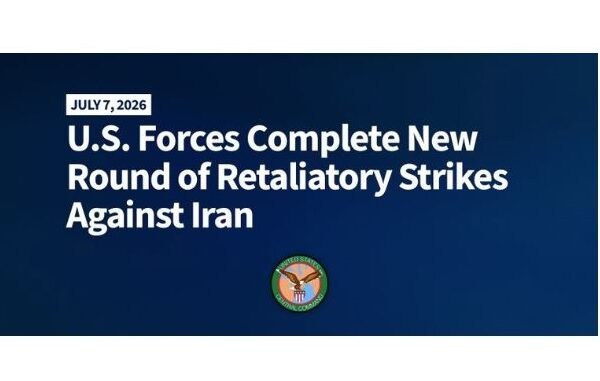
80 Targets Hit by U.S. On Tuesday, July 7, 2026, the U.S. Central Command responded to the recent attack on vessels in the strait by attacking over 80 targets. U.S. forces struck Iranian air defense systems, command and control networks, coastal radar sites, anti-ship missile capabilities, and more than 60 Islamic Revolutionary Guard Corps (IRGC) small boats in and near the strait. The stated purpose of the strikes was to degrade Iran’s ability to attack international shipping moving through the Strait of Hormuz. Most of the airstrikes appear to be along the Iranian coastline as well as targets on Qeshm Island. Read a CENTCOM statement on the attack: “U.S. Forces Complete New Round of Retaliatory Strikes Against Iran”, U.S. Central Command, July 7, 2026.
Sanctions Relief Revoked. On Tuesday, July 7, 2026, the United States revoked the General License that lifted sanctions on Iran oil. The U.S. Treasury had previously issued a General License in late June allowing the temporary production and sale of Iranian crude oil for U.S. dollars. The license was intended to support negotiations following the June ceasefire and provide Iran with economic relief. The U.S. revoked the temporary general license because it concluded that Iran had violated the conditions under which the sanctions relief had been granted. The temporary oil waiver had been one of Iran’s principal economic incentives for adhering to the ceasefire and participating in negotiations.
The new restriction allows a limited 10-day wind-down so companies can terminate transactions that had already been initiated. For more details see the “Issuance of Amended Iran-related General License”, Office of Foreign Assets Control, U.S. Department of Treasury, July 7, 2026.
Reuters is reporting explosions around Sirik, Bandar Abbas, Qeshm Island, and Kharq Island. (map) CENTCOM did not confirm Kharq Island as a target. The strikes appeared focused on Iran’s maritime strike network in the Strait of Hormuz — IRGC attack craft, coastal radar, air defense, drone, and anti-ship missile infrastructure — rather than a broad strategic strike package against Iran’s national oil infrastructure.
Patrol Boats. There have been recent social media reports that over 40 IRGC patrol boats are patrolling the strait as well as providing escort to ships traveling along the Iranian-designated SoH route. These same types of boats are also involved in attacks on U.S. naval vessels as well as commercial shipping. Some estimates state that Iran had over 1,000 of these small patrol boats prior to the onset of Operation Epic Fury.
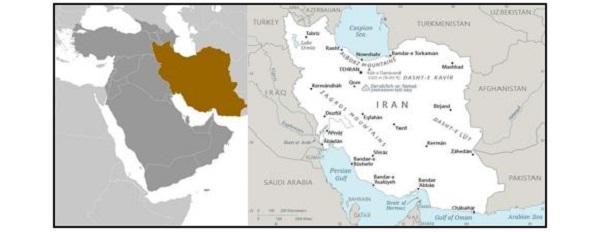
Iranian Attacks on U.S. and Allies. The Iranian forces have attacked U.S. naval vessels as well as targets in Bahrain and Kuwait after the U.S. retaliatory strikes. The U.S. 5th Fleet Headquarters in Bahrain has been targeted. The Kuwait Army announced that it was under attack by Iranian drones and missiles. There have been reports of explosions near Ali Al Salem Airbase in Kuwait. (social media) The Kuwaiti Ministry of Defence claims that their air defence intercepted 2 Iranian ballistic missiles and 13 drones on Wednesday morning.
Iran is claiming it has shot down a U.S. MQ-9 “Reaper” drone in the overnight U.S. airstrikes. According to the semiofficial Iranian media outlet Fars, the IRGC said it targeted 85 U.S. military facilities in Bahrain and Kuwait early on Wednesday morning.
The recent attacks by Iran on commercial shipping, revoking of the General License allowing Iran to sell oil, the U.S. retaliatory strikes, and the subsequent attacks on U.S. naval vessels and targets in Bahrain are casting doubt on the viability of the U.S.-Iran Memorandum of Understanding. The European Union (EU) aviation safety agency has warned airlines to avoid Iranian and Iraqi airspace until August 31. The United Maritime Trade Operations (UKMTO) Centre has raised the threat level in the strait to “severe”.
Ceasefire in Jeopardy. These recent exchanges of strikes by Iran and the U.S. fit the pattern of the months-long war that began in late February 2026. There have been periodic tit-for-tat actions, especially over the Strait of Hormuz. A fragile pause held into early July but the talks in Doha seem stalled. Meanwhile, in Ankara, Turkey where the NATO Summit is in progress, President Trump said on Wednesday morning that he thinks the interim agreement in Iran is “over”, but he would allow talks to continue. He said:
“For me, I think it is over. They can talk, but I think they’re wasting their time.”
A statement by the Iranian Foreign Ministry indicated that the MoU was no longer valid:
“Violation of our arrangements in Hormuz and continued Israeli strikes in Lebanon render the memorandum of understanding ineffective.”
The next key indicators will be whether Iran resumes attacks on commercial vessels, whether shipping firms alter transit patterns, whether U.S.-Iran negotiations continue despite the renewed escalation, if the U.S. will resume the SoH blockade of ships carrying Iranian oil, and if Israel will escalate its attacks on Hezbollah. In the meantime, the price of oil will go up.
*********
Image: CENTCOM
