
Executive Summary
Although the ceasefire is technically still in place, it is being violated by Iran. Several times in the past week Iran has attacked U.S. naval forces, commercial shipping, and Gulf state nations. Iranian drones and fast attack boats have attacked U.S. naval vessels as well as commercial vessels. In addition, Iran targeted oil facilities in the United Arab Emirates. The U.S. naval blockade in the Gulf of Oman is still in effect; the U.S. safe conduct of vessels through the Strait of Hormuz has been halted.

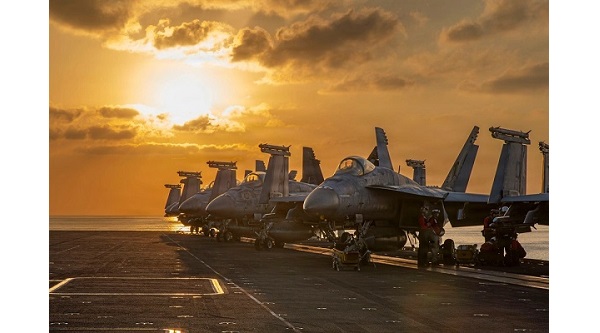
Top Photo: Aircraft are staged for flight operations on the flight deck of Nimitz-class aircraft carrier USS Abraham Lincoln (CVN 72) in support of Operation Epic Fury, Mar. 3, 2026. (U.S. Navy photo)
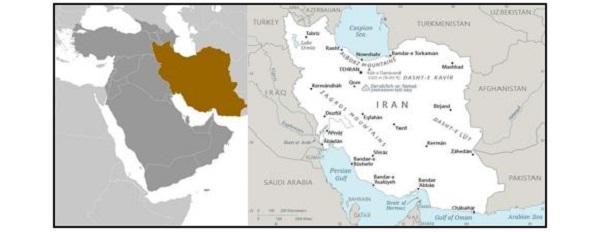
Click here for a larger physiography map of Iran that opens in a new tab.
Key Developments
- Iran continued violating the ceasefire with attacks on naval and commercial targets.
- Project Freedom was paused amid diplomatic pressure and escalation concerns.
- The U.S. naval blockade remains active despite reduced escort operations.
- Strait of Hormuz commercial traffic remains far below prewar levels.
- Gulf energy infrastructure continues to face Iranian missile and drone threats.
- A one-page 30-day ceasefire agreement is under discussion by Iran and the U.S.
Timeline
Monday, May 4, 2026
Iranian drones, missiles, and small fast boats initiated attacks against U.S. Navy vessels, commercial shipping, and targets in the UAE. U.S. attack helicopters destroyed at least six small attack boats that were attacking U.S. naval vessels and commercial shipping. The small boats were destroyed by AH-64 Apache and MH-60 Seahawk helicopters. This took place on the opening day of Project Freedom. One ship that was reportedly attacked is a South Korean cargo ship. It was struck in the engine compartment, was on fire, and towed to Dubai.
U.S. Central Command (CENTCOM) stated that the U.S. successfully guided two US-flagged commercial vessels through the strait on Monday.
Iranian drones attacked the Fujairah oil terminal of the United Arab Emirates (UAE). This terminal on the Gulf of Oman is the endpoint of the Habshan-Fujairah oil pipeline (ADCOP) that begins at the Habshan terminal in the Abu Dhabi oil fields. This pipeline allows the UAE to bypass the Strait of Hormuz. See map by Chris Rollins @ThePowerAudit. The only other major Hormuz bypass is Saudi Arabia’s East-West pipeline to Yanbu on the Red Sea. That pipeline was attacked in April causing the loss of 700,000 barrels per day of throughput.
In total, Iran launched 15 missiles (12 ballistic, 3 cruise) and four drones. Since the conflict began Iran has sent 2260 UAVs, 549 ballistic missiles, and 29 cruise missiles to the UAE. (source UAE MOD).
Chinese media outlet Ciaxin reported that a Chinese large refined-products tanker was struck by an Iranian projectile off the United Arab Emirates Al Jeer port on Monday.
Tuesday, May 5, 2026
President Trump announced a pause in Project Freedom. The White House stated the pause was intended to support ongoing diplomatic negotiations with Iran. (Reuters, May 5, 2026) Secretary of State Marco Rubio stated during a White House briefing that Operation Epic Fury had achieved its military objectives and was effectively ended. (Time, May 5, 2026)
Iran announced the creation of the Persian Gulf Strait Authority (PGSA). This new organization is intended to regulate maritime traffic and authorize commercial vessels to transit through the Strait of Hormuz. Tolls are likely part of the overall plan; payable to Iran.
Wednesday, May 6, 2026
An F/A-18 Super Hornet stopped an Iranian cargo ship from running the U.S. blockade as it attempted to sail toward an Iranian port on the Gulf of Oman. The F/A 18 disabled the M/T Hasna’s rudder after issuing multiple warnings and informing the Iranian-flagged vessel it was in violation of the U.S. blockade. The jet fired multiple shots from its 20mm cannon gun. “U.S. Forces Disable Vessel in Gulf of Oman Attempting to Violate Blockade”, U.S. Central Command on X, May 6, 2026.
American military bases were targeted in Erbil, Iraq on Wednesday, May 6. In addition, Kurdish forces near Erbil were targeted.
Thursday, May 7, 2026
The USS Truxtun (DDG 103), USS Mason (DDG 87), and USS Rafael Peralta (DDG 115) came under intense attack from Iranian fast attack boats, drones, and missiles in an engagement. The naval vessels 5-inch deck guns, small-arms equipped personnel on board the vessels, aircraft, and CIWS (Close-In Weapon System – Wikipedia) were employed to repel the Iranian attack, per reports. Some reports indicate that the attack took place as three U.S. destroyers were transiting out of the Strait of Hormuz. View a President Trump Truth Social post on this engagement. View a CENTCOM post on X on this naval engagement.
Friday, May 8, 2026
The United Arab Emirates announced that Iran sent three UAVs and two ballistic missiles into the UAE. Three people were reported wounded. On Friday, U.S. Central Command announced that more than 70 tankers are prevented from entering or leaving Iranian ports. These commercial ships have the capacity to transport over 166 million barrels of Iranian oil worth an estimated $13 billion-plus. As of Friday, more than 50 vessels have been redirected to ensure compliance with the U.S. naval blockade in the Gulf of Oman just east of the Strait of Hormuz.
Project Freedom
The U.S. announced that Project Freedom would begin on Monday, May 4, 2026. The operation is an attempt to assist U.S.-flagged and neutral vessels in their departure from the Persian Gulf by passing through the Strait of Hormuz, restore freedom of navigation, and reduce the maritime bottleneck created during the Iran conflict and blockade by Iran. The operation involved U.S. Navy destroyers, carrier-based aviation, ISR coverage, maritime escort corridors, and coordination with commercial shipping firms.
In mid-week, President Trump halted the operation due to pressure from a number of nations. News accounts say that two Gulf states (reported Saudi Arabia and Kuwait) temporarily restricted U.S. use of airspace and bases due to escalation concerns.
Overall Situation
Current conditions in the Strait of Hormuz (map) continue to reduce commercial vessels transiting due to concerns of Iranian mines, high cost of insurance and numerous vessels in the Persian Gulf and Gulf of Oman awaiting passage through the strait.
France Moves Forces into Region. On Wednesday, France deployed an aircraft carrier and fighter jets to the Gulf of Aden as part of a joint mission with the United Kingdom to restore naval passage in the region. The Gulf of Aden (map) sits between Yemen, Djibouti, and Somali. “France deploys aircraft carrier to Gulf of Aden, ready to act in Strait of Hormuz”, Le Monde, May 6, 2026.
Kurdistan. Iranian drone strikes have been conducted against targets in Iraqi Kurdistan (map) since February 28, 2026. Iran continues to strike targets in Kurdistan despite the ceasefire. There are 10,000 Kurdish fighters associated with Iranian Kurdish groups.
The ‘double blockade‘ of oil coming out of the Persian Gulf has driven up higher oil and gas prices in the United States. However, the U.S. economy is still strong – with strong employment. Around the world, other nations are more affected by the shortage of oil – especially China, which lost access to Venezuela oil.
The Iran War and Strategy. Jonathan Thebaudis, a strategic analyst based in France, argues that the U.S. and Israeli attack on Iran has changed three fundamental categories of classical strategic thought. “The War Against Iran and the Dissolution of Classical Strategic Categories”, Small Wars Journal, April 9, 2026.
- the distinction between combatants and civilians
- the distinction between sovereign states and transnational actors
- and the distinction between military and civilian instruments
Iran can control two critical waterways – the Strait of Hormuz and the opening to the Red Sea (by way of the Houthis). The ability of both Iran and the United States to sustain pressure in these maritime chokepoints is likely intended to strengthen their negotiating leverage in any future ceasefire or regional security agreement.
References
Operation Epic Fury Daily Timeline (National Security Info)
https://www.national-security.info/events/epic-fury/timeline-epic-fury.html
Past Articles by SOF News on Operation Epic Fury
https://sof.news/tag/epic-fury/
Past Articles by SOF News on Iran
https://sof.news/tag/iran
Operation Epic Fury – U.S. Central Command Updates
https://www.centcom.mil/OPERATIONS-AND-EXERCISES/EPIC-FURY/
OEFU Casualty Tracker
https://dcas.dmdc.osd.mil/dcas/app/conflictCasualties/oefu
ISW Daily Iran Update. The Institute for the Study of War provides a daily summary of the events taking place in the Iran War. https://understandingwar.org/analysis/middle-east/
Interactive Map: U.S. and Israeli Strikes on Iran, by the Institute for the Study of War and Critical Threats.
https://storymaps.arcgis.com/stories/089bc1a2fe684405a67d67f13bd31324
Interactive Map: Maritime Attacks. The Washington Institute map includes detailed descriptions of attacks and incidents, data on each vessel, and geopolitical analysis in the Middle East region from 2017.
https://www.washingtoninstitute.org/menamaritime/
Iran Country Profile by National-Security.Info. Maps, reports, and references.
https://www.national-security.info/country/iran.html
