
Treatment built to correct distorted thinking doesn’t have a way to tell the difference between guilt that’s wrong and guilt that’s right.
By Matt Ikenoyama
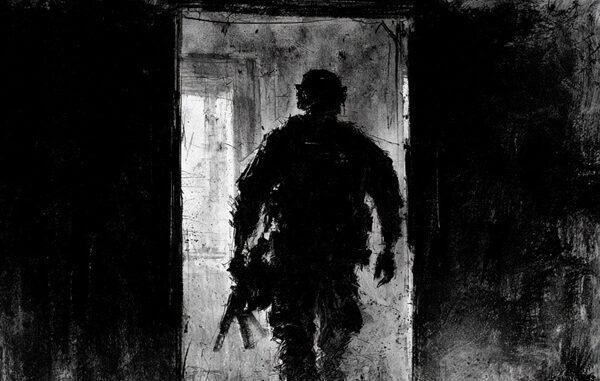
A Ranger fires through a doorway and kills someone he never meant to kill. He followed the rules of engagement. He did what the moment demanded. He is also now convinced he is a murderer.
Send him to standard PTSD treatment and the protocol has a category ready for what he’s carrying: distorted cognition, or a distorted reading. Prolonged Exposure and Cognitive Processing Therapy were built to correct thinking that doesn’t match reality, a fear response to a threat that’s gone, a belief that danger is everywhere when it isn’t. The clinician’s job is to walk the patient back toward an accurate reading of what happened. A 2025 review in the European Journal of Psychotraumatology, led by Victoria Williamson, found that conventional PTSD treatments, prolonged exposure among them, often inadequately address moral injury and may exacerbate symptoms. [1] The review goes further: cognitive approaches built to challenge “maladaptive appraisals” run into trouble when the appraisal isn’t maladaptive at all, when the distress comes from a genuine, justified moral transgression rather than a distorted read of one.
That’s the Ranger at the doorway. Ask whether his belief that he did something terrible is distorted, and the treatment has already assumed the answer is yes. It might not be. He killed someone he had no intention of killing. That happened. His account of it isn’t a symptom waiting to be corrected. It might be his conscience working exactly the way it’s supposed to.
Moral injury researchers have said versions of this for years without fully following it through. Brett Litz and his coauthors, in the 2009 paper that gave the field its first clinical model of moral injury, were explicit that the wound isn’t organized around fear the way PTSD is. [2] Litz later helped build Adaptive Disclosure specifically because the standard protocols weren’t reaching the moral dimension of the wound. [3] But the underlying machinery survives the workaround. Something happened, the patient’s reaction is treated as disproportionate, and the job of treatment is to bring the reaction back down to a manageable size.
That works for fear. Fear that’s out of proportion to present danger is, by definition, a distortion, and reducing it is the correct goal. It doesn’t work for guilt that’s earned. A person can carry guilt because their moral read of an event is accurate, and no amount of symptom reduction changes what happened or what it cost. Run that guilt through a protocol built to shrink it, and what the person is likely to hear is that their own moral judgment is the thing malfunctioning, on top of whatever they’re already carrying.
The same split shows up somewhere that has nothing to do with pulling a trigger. A SEAL survives an op. His teammate doesn’t. Nobody investigates him. There’s no rules-of-engagement call to review, no decision to second-guess. He still carries something, and it has a shape most people who’ve been through it recognize without needing it explained to them. Researchers studying this call it existential guilt, guilt for surviving with no claim of responsibility attached, and they separate it from content guilt, guilt built on a specific belief that your action or inaction caused the death. Content guilt is where the correctable distortions tend to live: the conviction that you should have swapped positions, that you’d have seen it coming if you’d only been paying closer attention, the kind of hindsight a person only has because the outcome already happened. Tend to, not always. The Ranger’s guilt is also a claim about what he did and his claim is true. That case is the one the literature hasn’t sorted out. Existential guilt isn’t a belief like that. There’s nothing in it to test for accuracy, because it was never a claim about what you did.
Henry Murray and his coauthors, writing on the cognitive treatment of survivor guilt, are direct about what treatment should and shouldn’t try to do with it. The goal isn’t erasing the guilt. It’s helping someone build, in their words, “a personally meaningful explanation for their survival,” and move from turning the loss over and over toward living with it, sadder, but not stuck. [4] Nobody in that literature is trying to get a person to stop caring that their friend died. The teammate mattered. That’s why it hurts. Treating the hurt itself as the target misreads what it’s for.
For content guilt, the kind built on an actual claim about what you did, there’s a way to work with it that isn’t correction and isn’t reassurance. Take the Ranger at the doorway. You don’t tell him he’s not a murderer. You don’t tell him he is. You ask what actually happened. Had he known the civilian was behind that door, would he have done anything differently? Would he have waited? If the answer is yes, he has just told himself something about what he did, in his own words, that no one handed him. If the answer runs the other way, he has told you something too, and the task shifts from asking questions to standing witness to what he’s said. Either way, the conclusion belongs to him.
Existential guilt doesn’t call for that kind of examination, because there’s no claim in it to examine. The SEAL isn’t wrong about anything, and there’s nothing to walk him back from. What it calls for is closer to what Murray’s team describes: not correcting it, just not leaving him alone with it.
Both of these are the same mechanism doing the same job. The Ranger’s conviction that he did something terrible is his conscience registering that a person is dead because of what he did. The SEAL’s grief is the same faculty registering that the guy next to him mattered enough that losing him hurts. A gauge that sits at zero when nothing’s wrong and moves when something is isn’t broken. It’s reading correctly. The hindsight-driven belief, the conviction that you should have swapped positions or should have seen it coming, is a different case. That’s the same gauge reacting to bad information, not tracking something real. Fixing the bad information isn’t suppressing the gauge. It’s giving it something true to run on. Suppressing a gauge that’s already reading true is a different move entirely, and it’s the one the field keeps making.
None of this argues against clinical treatment, or against having protocols at all; structure has real value. It’s consistent. It can be checked. Most service members carrying moral injury are also carrying PTSD, depression, or both, and the evidence that treating the trauma symptoms helps is real. [5] But before treatment starts, someone has to ask which case this is: a distorted reading worth correcting, or an accurate one worth leaving alone. The person best positioned to answer that is the one it happened to. They’re the expert on their own conscience. No one else can be. [6] What they’re often missing isn’t a diagnosis. It’s distance enough to actually ask themselves the question instead of flinching from it, and someone willing to sit there while they do. That’s a different skill than clinical training teaches, which is why the training that gets built around moral injury usually hands someone a protocol and leaves this part to chance.
Where the discipline comes from isn’t nothing, though. Someone who has carried this kind of weight themselves starts a conversation already trusted, the way an outsider only gets to after showing they’ve earned it. That head start is real. It changes how fast someone opens up, and sometimes whether they open up at all. It doesn’t change who’s doing the reading. The doorway question is available to anyone willing to ask it and actually listen to the answer, whether they’ve stood in one or not. What lived experience buys is an audience willing to sit still for it sooner.
Recognition speed is not the same as knowing how to listen, and lived experience only reliably buys the first. Jonathan Shay, the psychiatrist who first named moral injury as something distinct from PTSD, wasn’t a combat veteran. What let him hear it was years spent listening to many different men each work out, in their own words, what only they could actually judge about themselves. [7] A peer mentor who has sat with dozens of guys through this over the years learns to listen the same way, clinician or not. What doesn’t teach you that is one case, even your own. Recognizing the shape of your own wound instantly is no guarantee you’re hearing his, and not handing him yours instead. That’s the same question either way: is this actually what he’s describing, or does it just sound like what happened to me?
Most protocols still don’t leave room for him to ask himself that question before treatment starts.
The Ranger at the doorway was never asking to be corrected. He was asking someone to consider that his conscience might be right.
**********
Matt Ikenoyama is a U.S. Navy Chaplain. He was previously enlisted in the Navy and presented training on moral injury at Joint Special Operations Command. He is also a published co-author through Military Medicine and Joint Special Operations University Press.
Disclaimer
This article was prepared as part of official duties. The information, content, and conclusions do not necessarily represent the official position or policy of the Department of the Navy nor the US government.
Endnotes:
[1] Williamson, V., Kothari, R., Bonson, A., Campbell, G., Greenberg, N., Murphy, D., & Lamb, D., “Moral injury prevention and intervention,” European Journal of Psychotraumatology 16, no. 1 (2025): Article 2567721. https://doi.org/10.1080/20008066.2025.2567721
[2] Litz, B. T., Stein, N., Delaney, E., Lebowitz, L., Nash, W. P., Silva, C., & Maguen, S., “Moral injury and moral repair in war veterans: A preliminary model and intervention strategy,” Clinical Psychology Review 29, no. 8 (2009): 695-706. https://doi.org/10.1016/j.cpr.2009.07.003
[3] Litz, B. T., Lebowitz, L., Gray, M. J., & Nash, W. P., Adaptive Disclosure: A New Treatment for Military Trauma, Loss, and Moral Injury (Guilford Publications, 2017).
[4] Murray, H., Pethania, Y., & Medin, E., “Survivor guilt: a cognitive approach,” The Cognitive Behaviour Therapist 14 (2021). https://doi.org/10.1017/S1754470X21000246
[5] Norman, S. B., Nichter, B., Maguen, S., Na, P. J., Schnurr, P. P., & Pietrzak, R. H., “Moral injury among U.S. combat veterans with and without PTSD and depression,” Journal of Psychiatric Research 154 (2022): 190-197. https://doi.org/10.1016/j.jpsychires.2022.07.033
[6] Ingerson, M. C., Caterson, J. E., Wood, D., & Ikenoyama, M. K., Moral Injury: Implications for U.S. SOF and Ethical Resiliency, JSOU Report 23-2 (Joint Special Operations University Press, 2023).
[7] Shay, Jonathan, Achilles in Vietnam: Combat Trauma and the Undoing of Character (Atheneum, 1994).